









THE PROMISE AND THE CONTRADICTION
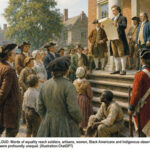
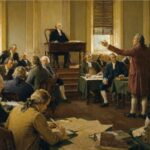
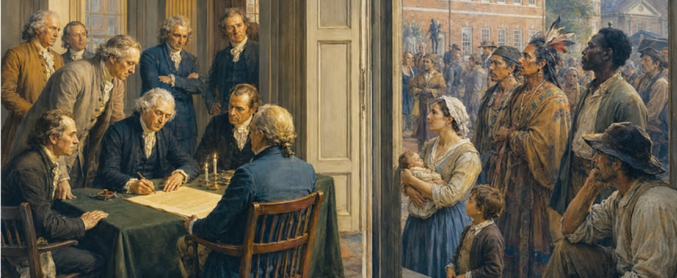
The assertion that all men are created equal was revolutionary in scope and radically incomplete in application. The political community of 1776 largely excluded women. Slavery existed in every state and formed the economic and social foundation of much of the country. Indigenous nations were not invited into the new compact; the Declaration itself referred to “merciless Indian Savages,” language reflecting frontier warfare and colonial prejudice while denying Native peoples’ sovereignty and grievances. Nor did equality erase distinctions of property, class, religion or race among free men. The Declaration announced a universal principle through institutions that practiced exclusion.
That contradiction is not a marginal footnote. It is central to the American story. Its language therefore carried a power beyond the intentions of many signers. If rights are unalienable, they cannot depend upon race or sex. If governments derive authority from consent, exclusion demands justification. If all are created equal, inherited hierarchies stand morally exposed. The proposition could be delayed, narrowed and betrayed-but it could not easily be forgotten.