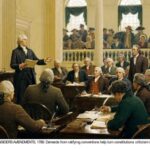












RATIFICATION: THE PEOPLE ARGUE
The Convention signed the Constitution on September 17, 1787. It would take effect after ratification by nine state conventions. The decision bypassed the unanimity required to amend the Articles and launched an extraordinary public debate in newspapers, pamphlets, taverns, churches and convention halls. Federalists argued that the Confederation invited weakness and disorder. The proposed Constitution, they maintained, derived authority from the people, limited national power through enumeration and divided it through federalism and checks. Alexander Hamilton, James Madison and John Jay defended the plan in essays later known as The Federalist Papers. Anti-Federalists feared distant consolidated government, a powerful executive, federal courts, taxation and standing armies. They objected that the Constitution lacked a declaration of rights. Their warnings were not simply resistance to progress; they identified enduring dangers of centralized power and forced supporters to explain the document more precisely. Delaware ratified first in December 1787. New Hampshire became the ninth state in June 1788. Closely divided conventions in Virginia and New York followed. North Carolina initially withheld approval; Rhode Island resisted until 1790. Ratification succeeded partly because Federalists promised amendments protecting individual liberties.
“The Constitution gained authority not because criticism disappeared,but because criticism became part of the settlement.”